
Finding Kalamazoo Resident Records
The most useful Kalamazoo resident search starts with the detail already known. A current street address is best for the Kalamazoo County Parcel Search or the City of Kalamazoo property database. A full name can lead to the Michigan Voter Information Center, a Kalamazoo court index, a professional-license record, or a dated newspaper and directory entry. An old Kalamazoo address belongs first in the city-directory and map trail. Each source answers a limited question. A parcel card can connect an owner to land, while a directory can place a named household at an address in one edition. Neither alone identifies every person at an address.
Keep the result date with every note. Kalamazoo has city, township, and postal boundaries that do not always line up, and historic Kalamazoo street numbers changed. The strongest answer usually comes from two independent records with the same name, place, and time period. When a record is not online, the sensible next stop is the Kalamazoo office, library, archive, or a narrow written request to the office that holds it.
- Start with the county parcel tool when you have a street address, owner name, or parcel ID.
- Use the state voter service screen for an individual election lookup, then note that it is a current service result.
- Search the Register of Deeds index for a dated land-document connection, preserving the document number or liber and page.
- For earlier households, compare Kalamazoo city directories and their street-order sections at the library.
- Ask the responsible custodian for one defined record when an index points to a file that is not online.
Kalamazoo Resident Records Offices
Kalamazoo County offices separate land, assessment, election, vital, and court custody even when their offices share an address. The Kalamazoo Register of Deeds holds recorded land instruments and its document search is the right path for grantor and grantee names. Kalamazoo Equalization maintains the county parcel search. The Clerk/Register of Deeds also maintains county election functions and vital-record routes. A Kalamazoo city property result or county map can supply a lead, but the office holding the underlying record controls corrections and certified copies.
Kalamazoo County Register of Deeds
201 W Kalamazoo Ave
Kalamazoo, MI 49007
269-383-8970
Kalamazoo County Equalization
201 W Kalamazoo Ave, Room 404
Kalamazoo, MI 49007
269-383-8960
Kalamazoo County Elections
201 W Kalamazoo Ave
Kalamazoo, MI 49007
269-384-8080
In-person access remains useful when an online result lacks an image, a historical index has a gap, or a copy requires identification. The Register’s regular hours are Monday, Tuesday, Thursday, and Friday from 8:00 a.m. to 4:30 p.m., and Wednesday from 9:00 a.m. to 4:30 p.m. Equalization asks visitors to make an appointment because staff availability is limited.
Kalamazoo Address Record Trail
For a current Kalamazoo address, use the county parcel search before guessing from a map pin. Its three documented modes are Owner, Parcel ID, and Street. A partial owner name can help with a spelling variant. Parcel IDs accept hyphens, spaces, or no hyphens, and a Kalamazoo street name by itself can return the parcels on that street. Save the parcel ID because it is the more stable property key when names or mailing details change.
The City of Kalamazoo BS&A database begins with an address search and then opens a property record. Its documented tabs include property information, taxes, building information, utility billing, and invoices. The current-owner field belongs to a property record. It is not proof that a person currently lives at a Kalamazoo address. Kalamazoo County and city GIS pages add parcel geometry and context, but both say that maps are informational rather than legal surveys.
| Portal | Field or control | Type | Format notes |
|---|---|---|---|
| County Parcel Search | Owner | Text | Any portion of a name; the county illustrates surname and first initial. |
| County Parcel Search | Parcel ID | Text | Whole or partial ID, with hyphens, spaces, or no hyphens. |
| County Parcel Search | Street | Text | Number and name, name alone, or number alone when spelling is uncertain. |
| City BS&A | Address | Text | Enter an address, then use Enter or Search; record type can be adjusted. |
Note: A parcel or map result is a place and ownership lead, not a complete household list for a Kalamazoo address.
Kalamazoo Voter Record Boundaries
The Michigan Voter Information Center is designed for an individual Kalamazoo voter-service search. Its name route uses first name, last name, birth month, birth year, and ZIP to narrow a result. It also has driver-license and address routes, plus a county route. A returned result can provide registration status, polling-place information, sample-ballot access, absentee tracking, and related election service details. It is not a general Kalamazoo resident roll that can be used to build a street-wide list.
The state makes voter-registration records generally public through the Qualified Voter File process, while withholding sensitive fields such as driver or state ID numbers, full birth details, phone, email, digitized signatures, and protected-address information. Michigan’s Address Confidentiality Program also provides substitute-address handling for qualifying Kalamazoo people facing serious safety risks. A public Kalamazoo result should never be used to work around that protection.
The Michigan Voter Information Center shows the name-search fields used to narrow a Kalamazoo residents directory inquiry.
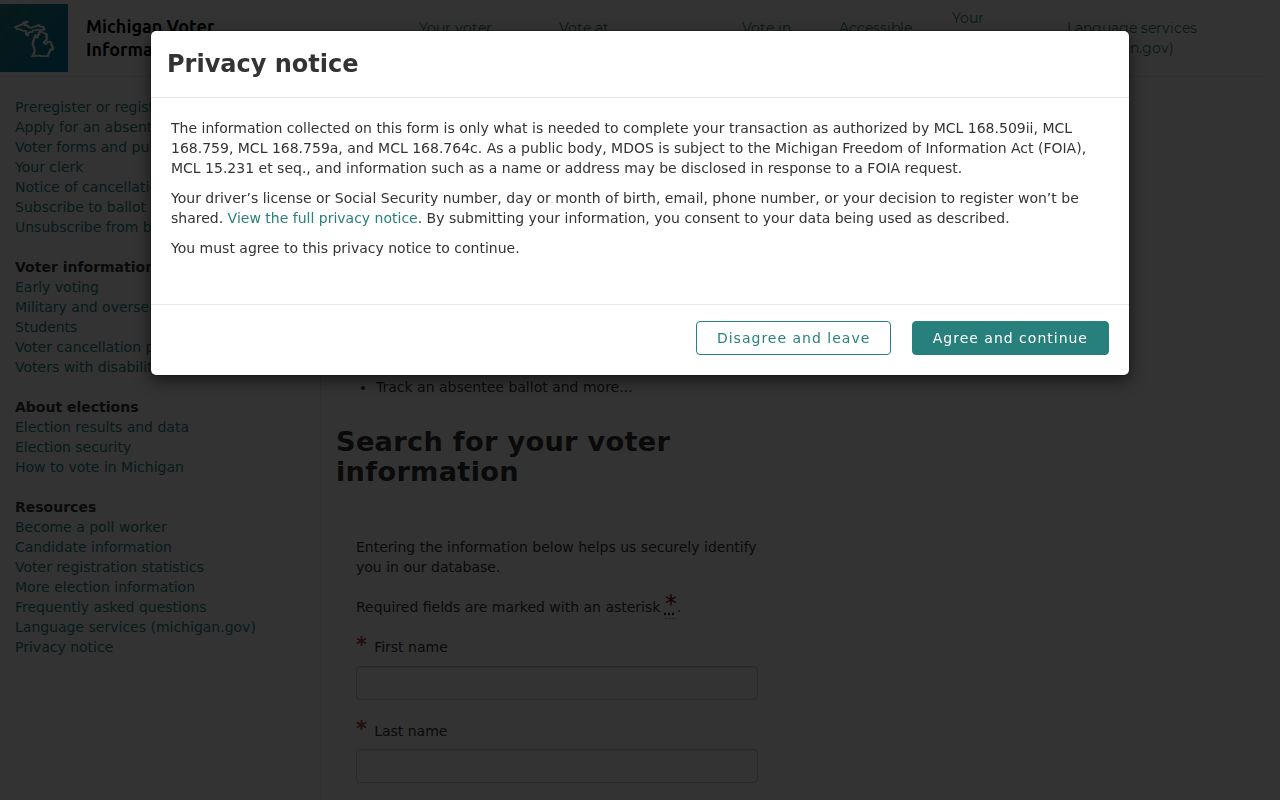
Use the result as an election-service check, then return to the original election office for an official file or correction question.
Current Kalamazoo Resident Directories
There is no single master list of Kalamazoo residents. Instead, several Kalamazoo public systems describe different relationships to the city or county. Kalamazoo property sources identify parcels and owners. The recorder’s index names parties to recorded instruments. Voter services deal with registration. Court and state systems have their own public limits. KPL’s Local Organization Directory can help locate a Kalamazoo organization’s public contact, but it is not a membership list.
| Source | What it can establish | Keeper | Access route |
|---|---|---|---|
| County parcel record | Owner, parcel ID, and current property context | County Equalization | Free online search, office appointment |
| City property record | Current-owner field, tax, sale, and permit context | City Assessor | Address search and city office |
| Recorded land index | Grantor, grantee, date, and document reference | Register of Deeds | Free index; image and copy options vary |
| Voter service result | Registration and election-service information | Michigan Department of State | Individual lookup or QVF request route |
| Organization directory | Public organization contact information | Kalamazoo Public Library | Online collection, currentness varies |
When the goal shifts from a name to the other properties along a road, the Kalamazoo by-street directory follows the address-keyed record chain instead of repeating an individual lookup.
Checking Kalamazoo Record Matches
A Kalamazoo name match is only a lead. Compare the record date, municipality, parcel or document identifier, and the type of record before joining two entries. The Kalamazoo postal area reaches beyond the city line, so a Kalamazoo mailing address can sit in a township, Portage, Parchment, or another municipal context. A Kalamazoo parcel ID, street range, court number, or directory edition is more useful than an unsupported name-only conclusion.
- Record roll
- A list or system made for one administrative purpose, such as a parcel or voter record. It does not describe every resident.
- Index
- A search aid that points to a document or collection. An index result can omit images, details, or protected records.
- Criss-cross directory
- A street-order section that groups entries by address rather than by surname.
- Parcel
- A mapped unit of land with an identifier used by the assessment and GIS systems.
For historic research, record the exact directory year and page, then test the result against a neighboring edition, a newspaper notice, a map, or a deed. A changed name can reflect marriage, initials, an abbreviated entry, or a different person. The research trail should state which part is known and which part still needs verification.
Kalamazoo Source Types Compared
For Kalamazoo, official sources and commercial data compilations do not serve the same purpose. A Kalamazoo County portal identifies its own fields, coverage, and correction route. A court, vital-record, or land office can explain whether a document is available and how to request it. Commercial compilations can mix old address material, marketing data, and copied public records, so an apparent match may combine more than one person. Verify a useful Kalamazoo lead at the agency or collection that created the record.
| Question | Official path | Why it matters |
|---|---|---|
| Who owns a parcel? | County parcel search or City BS&A | The portal provides the parcel context and custodian. |
| Was an instrument recorded? | Register of Deeds index | It supplies the document reference and copy route. |
| Did a household appear in a year? | KPL city directory volume | The edition and page preserve the historical context. |
| Does an old report have support? | Original office or archive collection | The source can explain scope, gaps, and corrections. |
Note: Keep a source URL, record date, search terms, and result limits with each Kalamazoo search result.
Kalamazoo Official Status Searches
Some Kalamazoo and state systems are narrowly scoped and should stay separate from a general resident search. The LARA license list route can show a named credential’s type, status, issue or expiration information, address, specialty, and discipline when those fields are published. That says something about a credential record, not a person’s present Kalamazoo address or current local activity. Match it to a dated official record if the identity matters.
The LARA license list and report entry is the official starting point for the state’s license material.
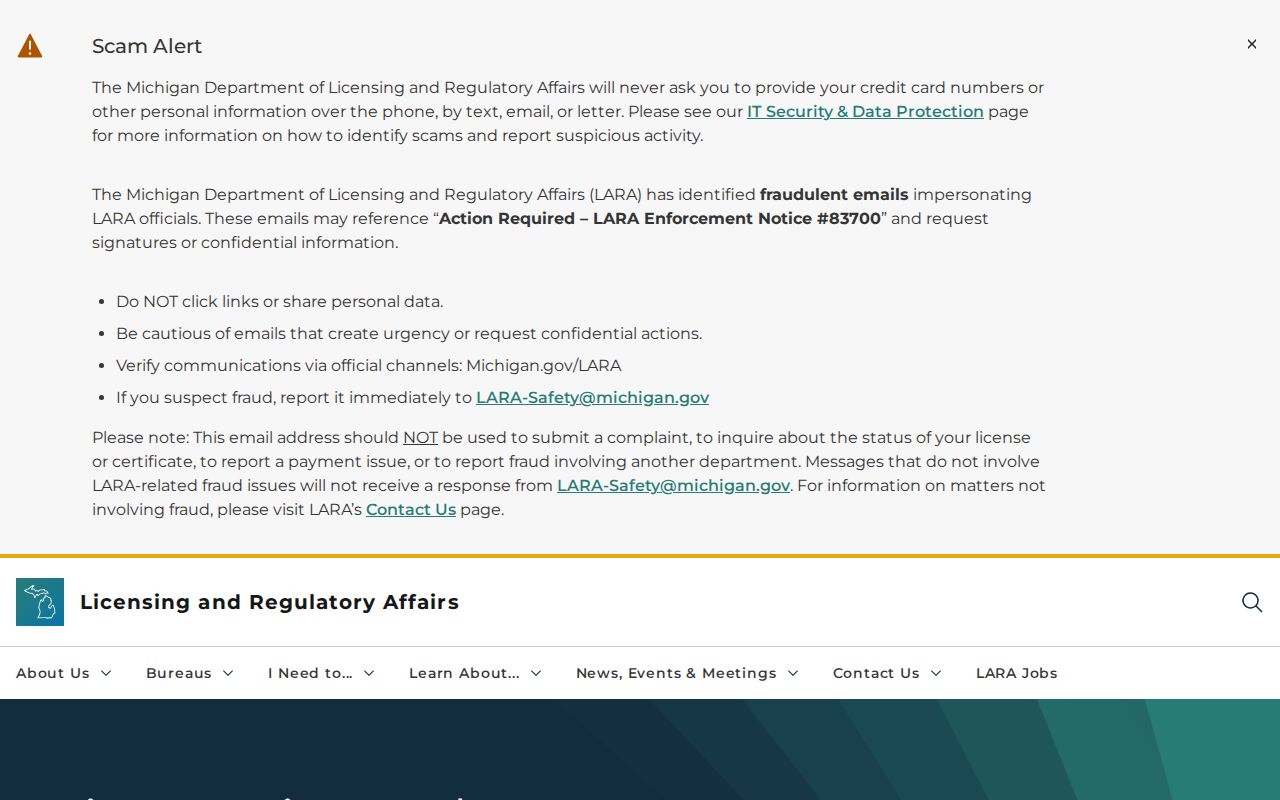
A published license result is best treated as a dated credential check with its own agency verification path.
The county inmate inquiry is a live booking and in-custody tool, not a complete history or a finding about guilt or a final court outcome. Search it only when that limited current status is the actual question, and confirm any material point through the court or responsible agency.
The Kalamazoo County inmate inquiry displays the name, booking, custody, date, and facility filters that define its narrow scope.
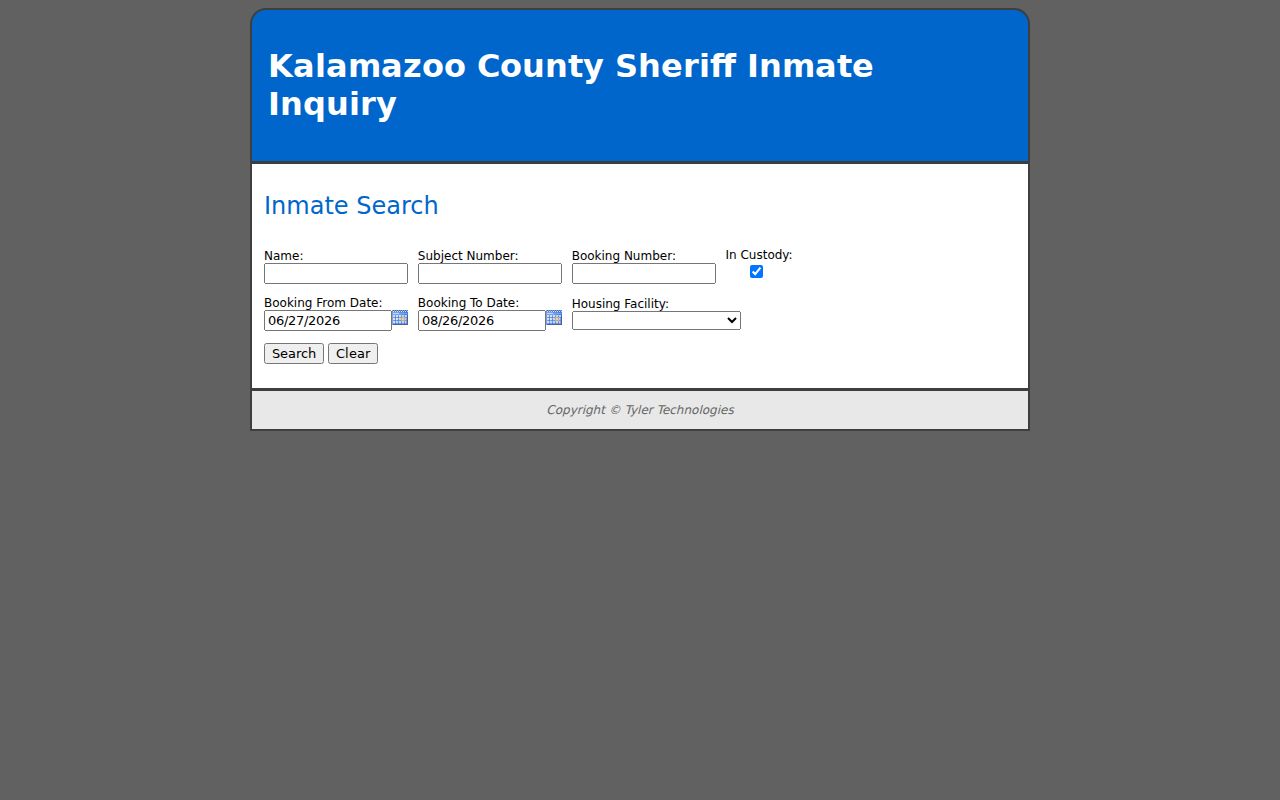
The county screen is a current roster view, so save the date and do not treat a result as a complete criminal record.
Michigan OTIS covers people currently supervised by the state corrections department and people discharged within its stated three-year window. It excludes many county-jail, city-lockup, unsentenced, and older records. The state registry likewise has its own publication limits and a name, address, city, county, ZIP, and map-radius interface. Neither system substitutes for a Kalamazoo court docket.
The Michigan OTIS search displays the state-supervision route and its scope warning.
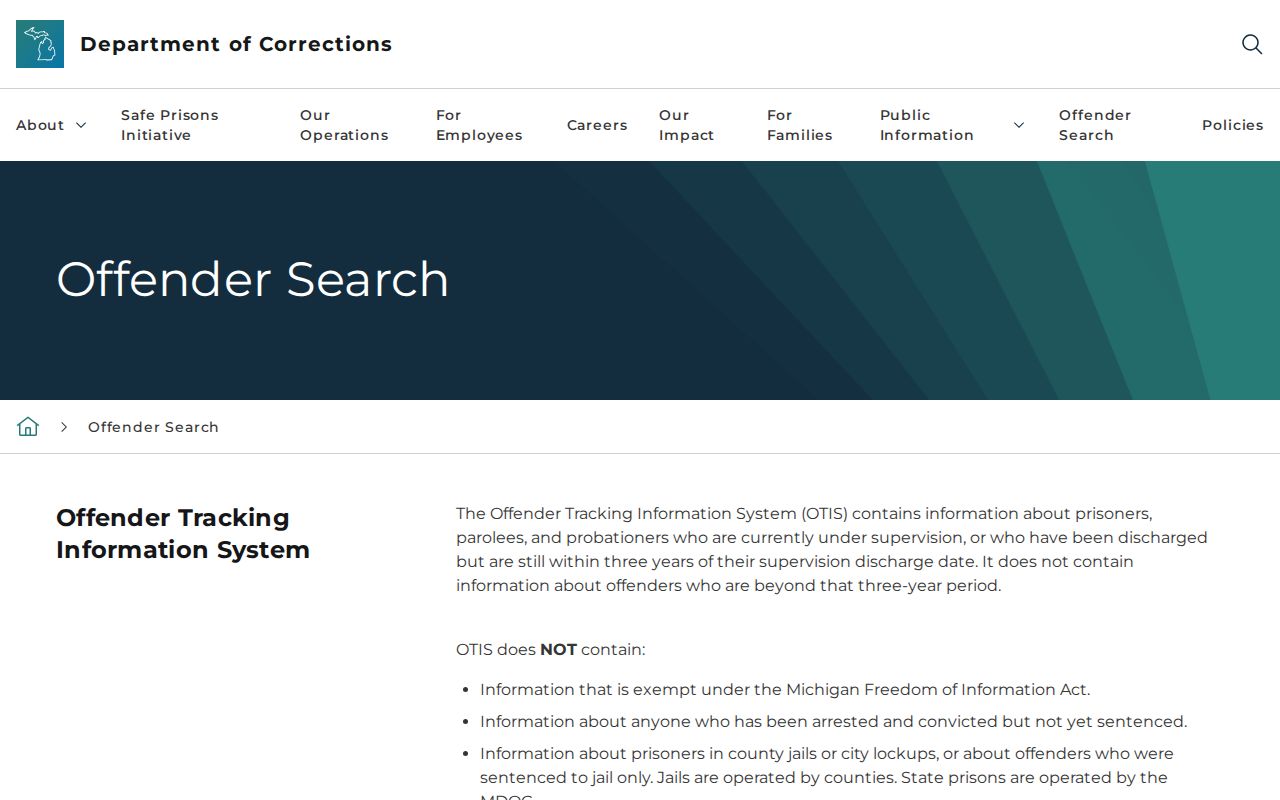
A no-result in OTIS does not settle what may appear in a county record, a court file, or a different state system.
The Michigan State Police registry shows the separate name, address, city, ZIP, and map-radius search fields.
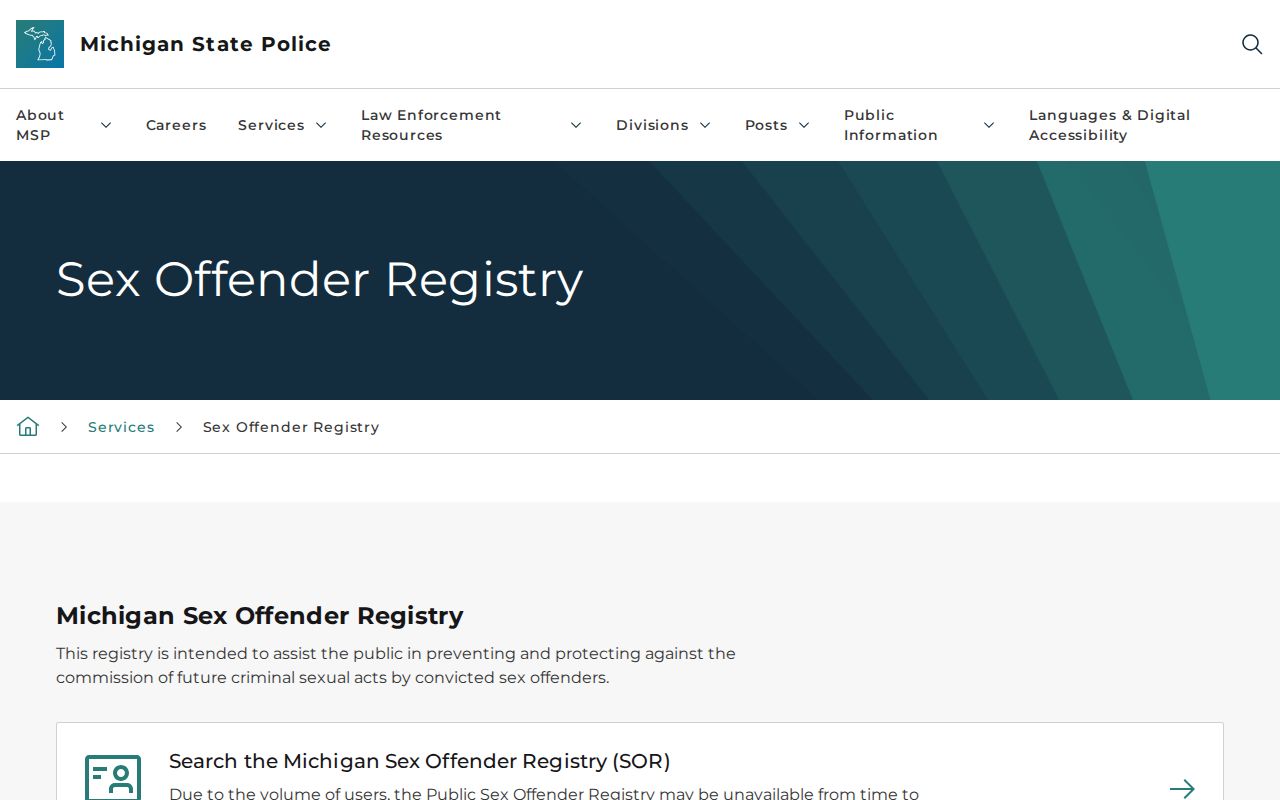
Registry publication rules and result limits still apply, so use the source page and date rather than copying a result into another record.
Historic Kalamazoo Resident Directories
Kalamazoo Public Library is the main local route for past households. Its Kalamazoo city-directory run begins in 1860, street-order sections begin in 1897, and the library also holds old telephone directories, maps, plats, Sanborn material, newspapers, yearbooks, cemetery sources, and local indexes. The Kalamazoo city run is described as complete as published, which does not mean every calendar year has a volume. A suburban edition ran from 1966 through 1976 and became a regular city directory in 1977; rural and county editions are less consistent.
Older research is strongest when a directory entry, street-order entry, map, and later record agree on the same period. KPL’s Local History Collection offers the physical and digital paths, while the Kalamazoo city directories collection explains how to read the volumes and trace a household through the years.
Kalamazoo Directory Number Changes
Historic Kalamazoo addresses need special care. The citywide numbering change occurred in 1925, and there was no 1925 city directory. A 1924 entry and a 1926 entry should be compared before deciding that a household vanished. Earlier numbering used a central point near Burdick, Kalamazoo Mall, and Michigan Avenue, with river-distance logic. The 1932 Sanborn map can help bridge older and newer numbers.
Kalamazoo street names can also change the search. KPL documents Cork and St. James, Vine and Rice, Michigan and Main, Oakland and Asylum, Riverview and Seminary, plus historic Westnedge segments. Search both forms, retain the Kalamazoo source year, and use a plat or Sanborn sheet before tying a historical address to a modern parcel. This is a Kalamazoo-specific safeguard against a false gap.
Kalamazoo Archive Research Desks
KPL’s Kalamazoo local-history room is on the second floor of the Central Library at 315 S Rose Street, and the collection’s phone is 269-553-7808. Printed indexes are in that room, while microfilm reader-printers are nearby in the Tech Center. The library’s Kalamazoo clipping files are particularly useful for 1928 through 1968, and the Meader Historical Directory supplies indexed scanned biographies and photographs of hundreds of late-nineteenth- and early-twentieth-century residents. Treat a biographical sketch as a historical source that needs corroboration.
Western Michigan University’s Regional History Collections add Kalamazoo personal papers, organization records, newspapers, photographs, genealogy, and Southwest Michigan history. The Kalamazoo Zhang Center at 1650 Oakland Drive is for on-site use; its research contact is 269-387-8490 and arch-collect@wmich.edu. The Archives of Michigan and Library of Michigan offer another route for older court, land, tax, military, election, and vital series.
The WMU Regional History Collections overview identifies the archive’s local materials and research scope. For a collection request, provide a name, dates, a place, and the research goal so staff can identify a relevant finding aid.
Kalamazoo FOIA Request Route
Michigan Freedom of Information Act requests under MCL 15.231 et seq. work best when they identify a Kalamazoo department, record type, date range, and case, parcel, or document identifier. Kalamazoo County accepts written requests through its Public Records Portal and by email, fax, mail, or in person. The usual state response period is five business days, subject to a statutory extension. Fees can cover search, review, copying, separation, and mailing.
Kalamazoo FOIA is not a way to demand a new list, bypass confidential fields, or replace a court’s own copy rules. For a Kalamazoo deed image, start with the Register of Deeds. For a Kalamazoo court docket, use the court’s copy procedure. For a library or archive series, ask the collection custodian. Narrow requests usually lower ambiguity and help protect private information.
Kalamazoo Indexing Changes
Kalamazoo County’s 2025 Clerk/Register of Deeds annual report, published in 2026, described approximately 87,000 documents receiving enhanced indexing and about 32,000 historical documents being indexed. That Kalamazoo work helps discovery, but it does not erase older indexing gaps or turn an index into proof of a property right. Check the actual Kalamazoo document and the office’s copy rules when the record matters.
WMU also announced digitized Kalamazoo County Poorhouse ledgers from 1885 through 1912 in February 2026. The Kalamazoo transcription includes names, ages, and historical reason-for-stay fields. It should be read as an archival index and checked against the scan, with historical terminology left in its original context.
Note: A newer search interface can improve access, but the record date and the original custodian still control what a result means.